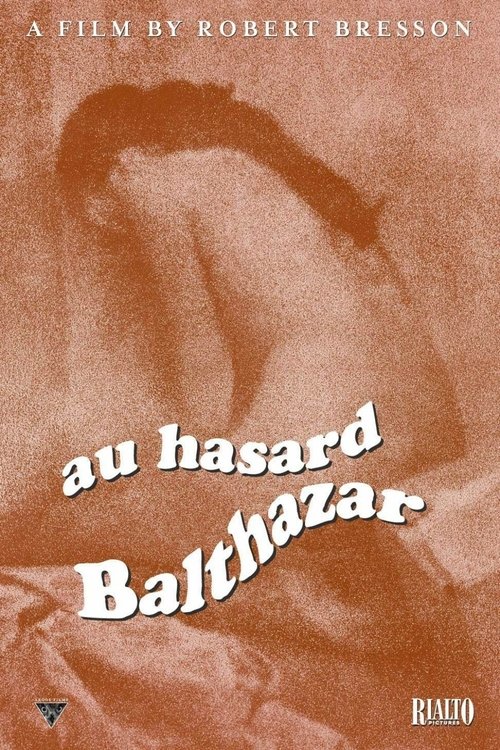
Au hasard Balthazar follows a donkey named Balthazar through a series of owners in rural France, each representing a different human vice or virtue. Directed by Robert Bresson in 1966, the film uses Balthazar as a silent, saintly witness to the full spectrum of human behavior, from innocence to brutality. Widely regarded as one of cinema's greatest achievements, the film is a profound meditation on suffering, grace, and the indifference of the world.


Bresson follows a donkey through seven owners and the slow accumulation of human cruelty. The civilian is the donkey, watched but never spoken.
Robert Bresson's minimalist masterpiece uses sparse dialogue and a donkey's silent perspective to reflect human cruelty and suffering with devastating emotional impact.
Bresson follows a donkey through seven owners and the slow accumulation of human cruelty. The donkey says nothing; the film says everything.
A donkey passes from owner to owner, absorbing human cruelty and grace with saintly patience. Bresson turns a beast of burden into the purest soul in all of cinema.