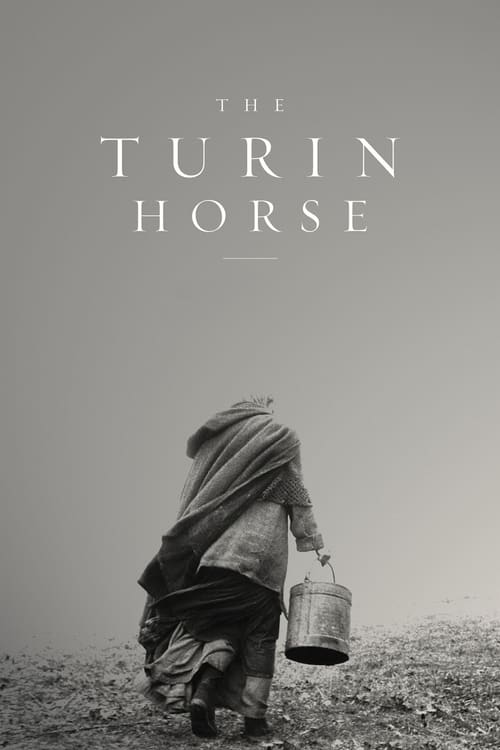
The Turin Horse follows an aging coachman and his daughter living in near-total isolation, enduring a relentless windstorm that threatens their austere, repetitive existence. Inspired by Nietzsche's famous breakdown upon witnessing a flogged horse in Turin, the film contemplates the slow collapse of civilization and meaning. Béla Tarr crafts a hypnotic, minimalist meditation on suffering, endurance, and the entropy of all things.


Béla Tarr's final film: thirty long takes of a father, daughter, and dying horse as the world ends. The wind never stops. Neither does the camera.
The worn-out horse whose beating supposedly broke Nietzsche's mind stands at the center of Tarr's bleak apocalypse. Its exhausted refusal to go on becomes the film's dying breath.
Over six days a horse stops eating, the wind never stops, and the world grinds to a halt. Tarr's black-and-white doomsday is the end of everything, at a whisper.